Introduction
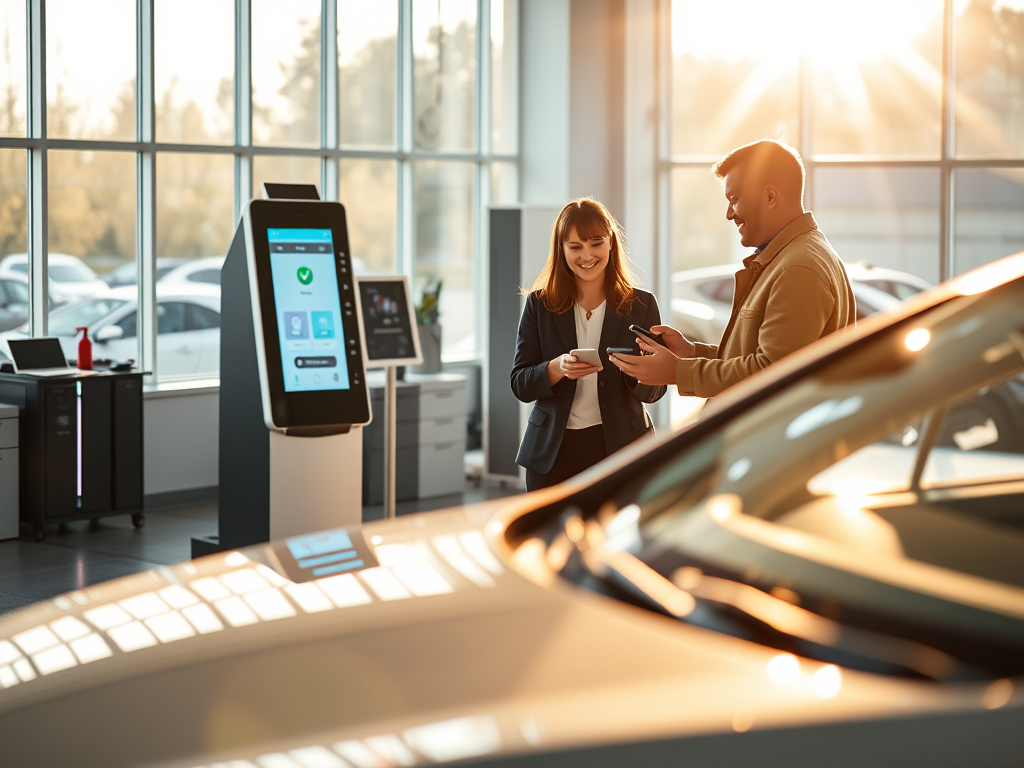
The automotive service industry is undergoing rapid evolution, driven by technological advancements and shifting customer expectations for convenience and efficiency. An innovative approach that has gained traction is the implementation of self-check-in systems for automotive service centers. These systems enable customers to independently check in their vehicles, input necessary details, and receive real-time service updates via mobile apps, web portals, or on-site kiosks. This not only enhances customer satisfaction but also optimizes operational workflows for service providers. The global self-service kiosk market, which includes applications in automotive services, was valued at USD 34,358.2 million in 2024 and is projected to grow to USD 62,456.4 million by 2030, reflecting a compound annual growth rate (CAGR) of 10.9% from 2025 to 2030 (Grand View Research, 2024). This growth underscores the potential of self-check-in solutions to revolutionize service maintenance. In this study, we examine the mechanics of self-check-in systems, their benefits, and their transformative impact on the automotive sector, drawing on industry reports and case studies.
Streamlining the Check-In Process
Conventional check-in procedures at automotive service centers typically require paperwork, manual data entry, and queuing, which can lead to inefficiencies and customer frustration. Self-check-in systems address these challenges by allowing customers to use their smartphones, dedicated apps, or kiosks to input vehicle information such as make, model, mileage, and specific concerns upon arrival.
This digital approach minimizes errors associated with manual entry and accelerates the process significantly. For instance, self-service kiosks have been shown to reduce transaction times to under two minutes in most cases, while also tying into backend dealer systems for real-time data integration (Meridian Kiosks, n.d.). Furthermore, automated systems employing technologies like Automatic Number Plate Recognition (ANPR) can eliminate manual verification entirely, capturing vehicle details via CCTV and Optical Character Recognition (OCR) to store them in accessible databases (Tenzin et al., 2020). Such innovations not only save time but also improve data accuracy, laying the foundation for a more seamless service experience.
Real-Time Updates and Transparency
One of the primary advantages of self-check-in systems is the provision of real-time updates on vehicle service progress, accessible through apps or portals. Customers can monitor stages from initial inspection to completion, fostering trust and reducing uncertainty.
Automated notifications for milestones such as diagnostics or parts replacement further enhance this transparency, replacing traditional phone calls with convenient digital alerts. Digital touchpoints, including tablet-based kiosks, enable clear pricing displays and service carts, mitigating surprises at checkout and improving communication between staff and customers (Aila Staff, 2025). This level of visibility has been linked to higher customer satisfaction, as even brief wait times can decrease satisfaction by up to 50% without self-service options (AutoSuccessOnline, 2022).
Efficiency Gains for Service Centers
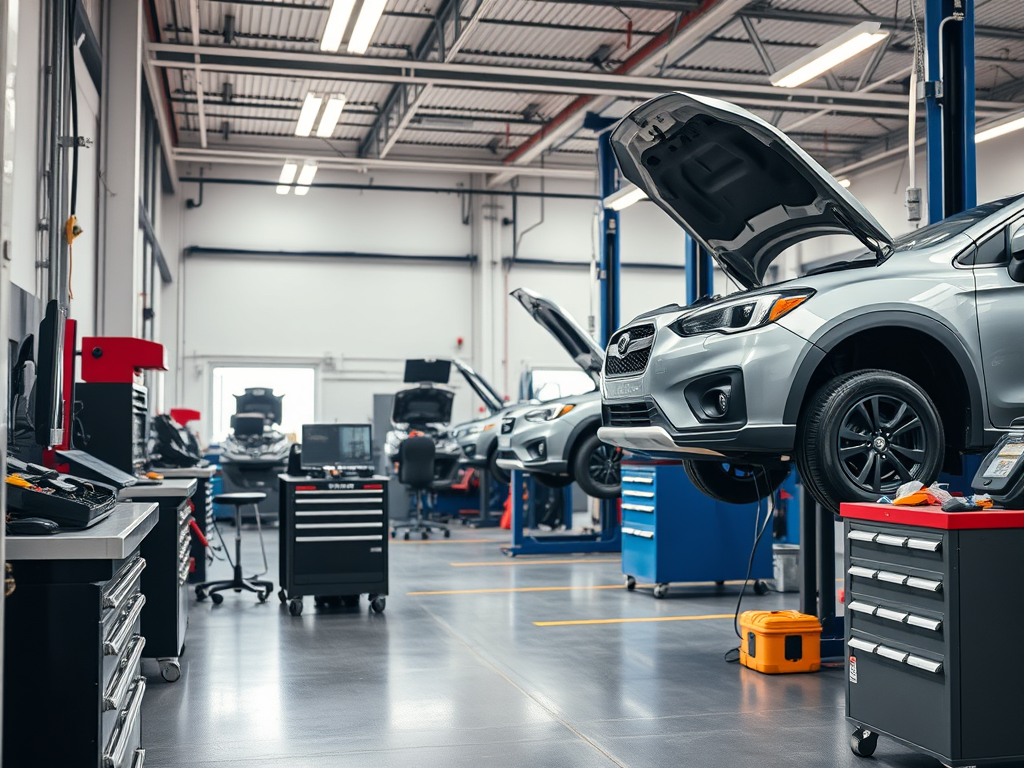
Self-check-in systems offer substantial operational benefits for automotive service centers by shifting administrative tasks to customers, allowing staff to prioritize technical work. This results in faster turnaround times and elevated service quality.
Moreover, these systems generate data on peak hours and service demands, facilitating better resource allocation and the promotion of bundled packages. Case studies demonstrate tangible gains: one dealership tripled upsell rates to 73% and increased average revenue per repair order by $80 within six months of kiosk implementation, while another improved check-in speeds and reduced backups (Meridian Kiosks, n.d.). Labor efficiency also rises, as kiosks handle data entry, freeing advisors for revenue-generating activities and potentially boosting upsells by over $60 on average (AutoSuccessOnline, 2022). Overall, these data-driven insights minimize idle time and maximize capacity.
Enhanced Customer Experience
Aligning with contemporary preferences for digital interactions, self-check-in systems deliver a user-friendly, convenient experience that promotes loyalty. By enabling remote initiation and avoiding queues, they cater to busy lifestyles.
Research indicates that such technologies reduce wait times and empower customers, leading to higher satisfaction and repeat business (Sharebox, 2024). In automotive contexts, kiosks have decreased check-in and check-out times by 30% in some cases, enhancing fleet turnover and retention (Sharebox, 2024).
Flexibility to Drop Off Vehicles Outside Working Hours
Self-check-in extends convenience by permitting vehicle drop-offs beyond standard hours, accommodating diverse schedules. This 24/7 accessibility attracts a broader customer base and reinforces customer-centric operations.
Integrated kiosks provide secure key management and service scheduling, ensuring seamless after-hours interactions without additional staffing (Sharebox, 2024). Such flexibility aligns with market trends toward contactless, always-available services, further boosted by hygiene considerations in recent years (Grand View Research, 2024).
Conclusion
Self-check-in systems represent a pivotal advancement in the automotive service industry, enhancing customer experiences, operational efficiency, and service quality. As evidenced by market projections and case studies, adopting these technologies is essential for competitiveness in a digital era. Beyond mere upgrades, they signify a shift toward customer-centric models, poised to define the future of automotive maintenance.
References
Aila Staff (2025) How Automotive Service Centers Use Digital Touchpoints to Enhance the Customer Experience. Available at: https://www.ailatech.com/blog/how-automotive-service-centers-use-digital-touchpoints-to-enhance-the-customer-experience/ (Accessed: 16 August 2025).
AutoSuccessOnline (2022) How Self-Service Technology can Benefit Your Dealership. Available at: https://www.autosuccessonline.com/how-self-service-technology-can-benefit-your-dealership/ (Accessed: 16 August 2025).
Grand View Research (2024) Self-service Kiosk Market Size, Share | Industry Report, 2030. Available at: https://www.grandviewresearch.com/industry-analysis/self-service-kiosk-market-report (Accessed: 16 August 2025).
Meridian Kiosks (n.d.) Automotive Service Kiosks for Car Dealerships. Available at: https://www.meridiankiosks.com/industries/automotive-dealership-kiosk-solutions/ (Accessed: 16 August 2025).
Sharebox (2024) Automotive evolution of the self-service kiosk. Available at: https://blog.sharebox.global/automotive-evolution-sharebox-kiosk (Accessed: 16 August 2025).
Tenzin, S., Dorji, P., Subba, B. and Tobgay, T. (2020) Smart Check-in Check-out System for Vehicles using Automatic Number Plate Recognition. Available at: https://www.researchgate.net/publication/344770025_Smart_Check-in_Check-out_System_for_Vehicles_using_Automatic_Number_Plate_Recognition (Accessed: 16 August 2025).