Introduction
The automotive aftersales sector, which includes parts supply, repairs, and maintenance services, is witnessing a significant transformation through the adoption of 3D printing technology. Also known as additive manufacturing, 3D printing enables the on-demand production of spare parts, reducing inventory costs and lead times while promoting customization and sustainability. This innovation addresses key challenges in aftersales, such as parts obsolescence and supply chain disruptions, by allowing service centers to produce components directly from digital files. The global automotive 3D printing market is projected to grow substantially, with trends focusing on spare parts production and supply chain optimization (The Business Research Company, 2025). This study examines the mechanics, benefits, and future potential of 3D printing in automotive aftersales, supported by industry trends and market insights.
How 3D Printing for On-Demand Parts Works
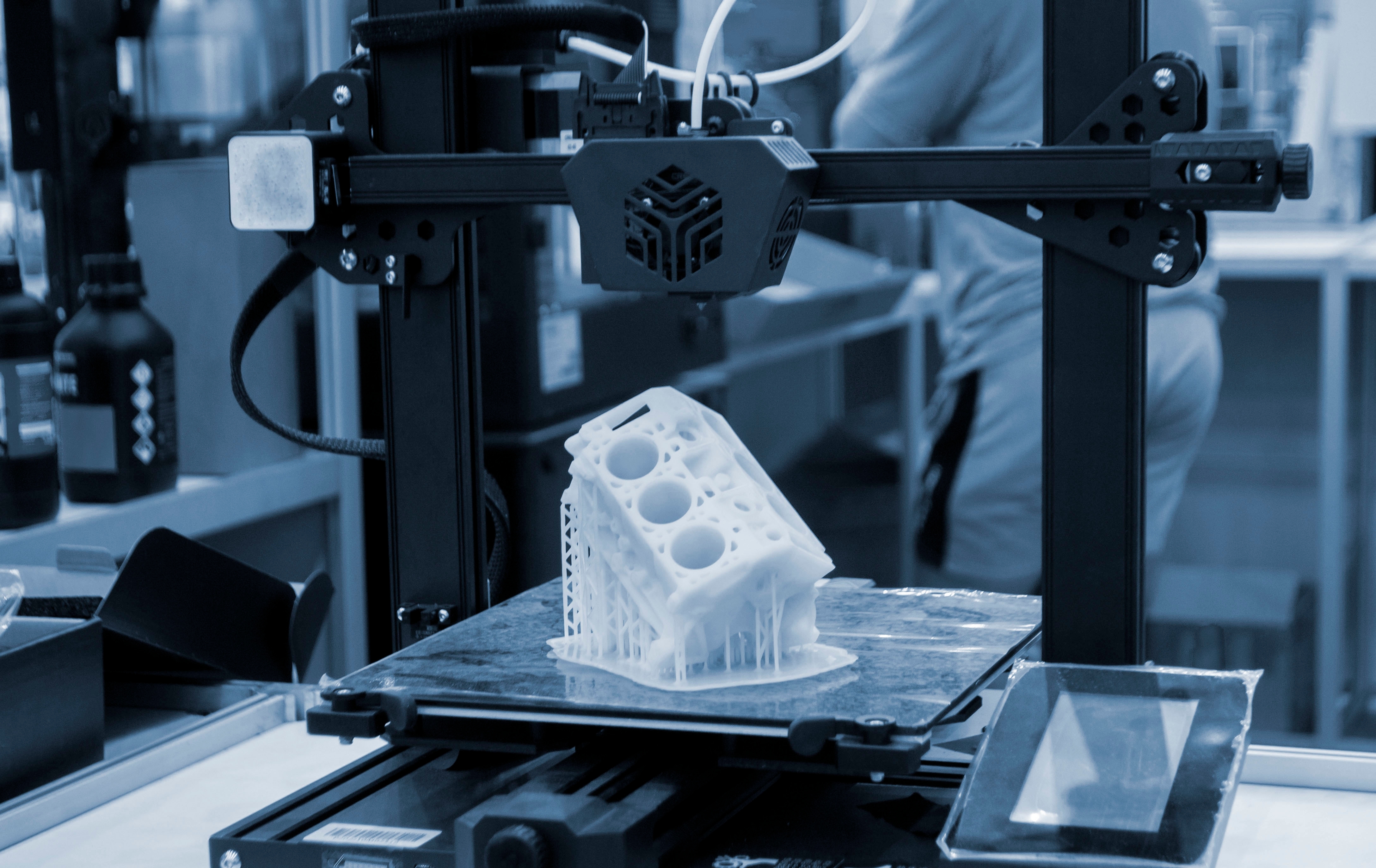
3D printing in aftersales involves creating physical parts layer by layer from digital designs using materials like plastics, metals, or composites. Service centers equipped with 3D printers can access manufacturer databases to download CAD files and produce parts on-site or at localized facilities.
Technologies such as Stereolithography (SLA) are increasingly adopted for prototyping and mechanical testing, offering high precision (Consegic Business Intelligence, 2025). Integration with software automates workflows, from design to printing, enabling rapid production of complex geometries that traditional manufacturing struggles with (3DZ, 2025). For electric vehicles (EVs), 3D printing supports custom battery components or lightweight parts, aligning with electrification trends (Epicflow, 2025).

Real-Time Production and Transparency
3D printing facilitates real-time parts production, providing transparency in aftersales by allowing customers to track the manufacturing process via digital platforms. Service centers can notify customers when a part is printed and ready, reducing wait times significantly.
This on-demand approach combats parts shortages, with production times faster and costs lower than traditional methods (Epicflow, 2025). Customers benefit from visibility into sustainable practices, as 3D printing minimizes waste through precise material usage (3D Actions, 2025). Advanced materials like titanium further enhance durability and performance, offering clear updates on part specifications (3D Printing Industry, 2025).
Efficiency Gains for Service Centers
3D printing optimizes aftersales operations by enabling supply chain optimization and reducing inventory needs. Service centers can produce spare parts on demand, minimizing storage costs and obsolescence risks for rare components.
Major trends include lightweighting and mass customization, which improve repair efficiency and allow for tailored solutions (The Business Research Company, 2025). Dealerships adopting 3D printing report faster prototyping and reduced costs, with automation managing workflows for higher throughput (Rahn AG, n.d.; 3DZ, 2025). This leads to increased upsell opportunities, such as offering customized upgrades during repairs (PDM Automotive, n.d.).
Enhanced Customer Experience
By offering rapid, customized parts production, 3D printing enhances the customer experience in aftersales. Customers face shorter downtime, with parts available on demand rather than waiting for shipments.
This convenience aligns with preferences for personalized services, boosting satisfaction and loyalty (PDM Automotive, n.d.). For EV owners, 3D-printed components address specific needs like lightweight structures, improving vehicle performance (Massivit, 2025). Sustainable aspects, such as reduced material waste, appeal to eco-conscious consumers, further elevating the service perception (3D Actions, 2025).
Flexibility and Future Outlook
3D printing provides flexibility in aftersales by supporting large-format printing and advanced alloys, adaptable to various vehicle types and repair scenarios. It enables localized production, reducing logistics dependencies.
Future trends include AI optimization for faster processes and mainstream adoption of large-format systems by 2025 (Massivit, 2025; 3D Printing Industry, 2025). Challenges like material costs persist, but improvements in speed and automation promise broader implementation (3DZ, 2025). As the industry evolves, 3D printing will integrate with other technologies for even more efficient aftersales.

Conclusion
3D printing is revolutionizing automotive aftersales by enabling on-demand parts production, enhancing efficiency, and improving customer experiences. Supported by market trends and technological advancements, this innovation is essential for service centers in a competitive, sustainable landscape. By optimizing supply chains and promoting customization, 3D printing represents a key step toward future-proof aftersales practices.
References
3D Actions (2025) 10 most important 3D printing trends to know in 2025. Available at: https://3dactions.com/blog/most-important-3d-printing-trends/ (Accessed: 16 August 2025).
3D Printing Industry (2025) 3D Printing Trends for 2025: Executive Survey of Leading Additive Manufacturing Companies. Available at: https://3dprintingindustry.com/news/3d-printing-trends-for-2025-executive-survey-of-leading-additive-manufacturing-companies-236247/ (Accessed: 16 August 2025).
3DZ (2025) Trends for 3D printing in 2025 according to 3D Systems. Available at: https://3dzgroup.com/trends-for-3d-printing-in-2025-according-3d-systems-innovation-materials-and-automation/ (Accessed: 16 August 2025).
Consegic Business Intelligence (2025) Automotive 3D Printing Market Size, Share & Forecast (2025-2032). Available at: https://www.consegicbusinessintelligence.com/automotive-3d-printing-market (Accessed: 16 August 2025).
Epicflow (2025) Key Technology Trends in the Automotive Industry in 2025. Available at: https://www.epicflow.com/blog/5-latest-trends-in-the-automotive-industry/ (Accessed: 16 August 2025).
Massivit (2025) 3D Printing Trends: Additive Manufacturing 2025. Available at: https://www.massivit3d.com/blog/3d-printing-trends-on-the-horizon-anticipating-breakthroughs-in-additive-manufacturing-for-2025/ (Accessed: 16 August 2025).
PDM Automotive (n.d.) The Future of the Automotive Aftermarket Industry: Predictions For 2025. Available at: https://pdmautomotive.com/the-future-of-the-automotive-aftermarket-industry/ (Accessed: 16 August 2025).
Rahn AG (n.d.) The Impact of 3D Printing in the Automotive Industry. Available at: https://www.rahn-group.com/en/energycuring/3d-printing/3d-printing-in-the-automotive-industry/ (Accessed: 16 August 2025).
The Business Research Company (2025) Automotive 3D Printing Market Report 2025-2034 |Forecast. Available at: https://www.thebusinessresearchcompany.com/report/automotive-3d-printing-global-market-report (Accessed: 16 August 2025).