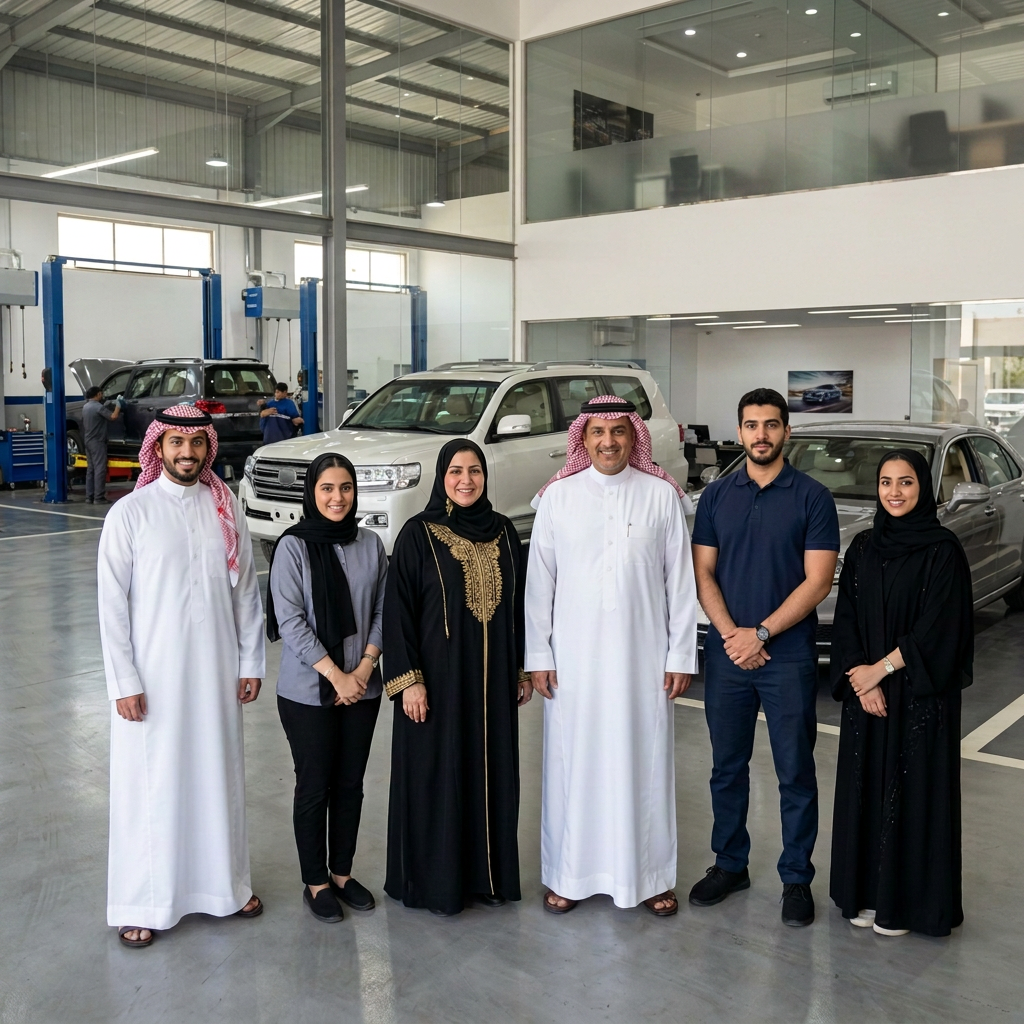
Six GCC Automotive employees posing together inside an automotive service center

The MENA Automotive Family Business

The MENA Automotive Family Business Intelligence Study 2026
Automotive Family Business Intelligence

Aftersages MENA Automotive Family Business Intelligence Study 2026

The Franchise and the Family: Distribution Dynasties, the Generational Cliff, and Why the Region’s Dealer Groups Will Be Won or Lost at Succession.

The MENA automotive industry is a family business industry. Virtually every national vehicle importer, dealer group and authorised aftersales network in the GCC and Levant is family-owned — most built on exclusive franchise agreements granted to founding traders in the 1950s–1980s and held ever since. Those franchises are the most valuable and most fragile assets in regional family capital: valuable because they anchor multi-billion-dollar groups with decades of aftersales annuity; fragile because they are personal-trust assets that OEMs re-evaluate at every generational transition. The global data is unforgiving — only ~30% of family businesses survive into the second generation and ~3–4% into the fourth, and 69% of Middle East family firms have no formal succession plan — and the automotive sector faces the transition at the worst possible moment: the agency model threatening the distributor’s role, Chinese brands re-drawing the franchise map in real time, the EV transition compressing the aftersales annuity, and a supply chain crisis stress-testing every balance sheet. This study maps the distribution dynasty economy, the trends breaking over it, its advantages and failure modes, the mechanics of losing the business — and the franchise — after a generation, and the continuity playbook for the families that intend to still hold the agreement in 2040.

Aftersages Automotive Consultancy August 2026
~95%+
GCC Auto Distribution Family-Owned
Aftersages est.; near-universal model
50–70 yrs
Age of Anchor Franchise Agreements
Granted to founders, 1950s–1970s
~30%
Family Firms Surviving to G2
Global research benchmark
69%
ME Firms: No Formal Succession Plan
PwC / World Economic Forum
15% → 34%
Chinese Brand GCC Share by 2030
AlixPartners — new franchises forming now
$1T+
GCC Family Assets in Transition
FBC-Gulf; distribution families prominent
Strategic Alert: Distribution Families & OEM Regional Teams

Every automotive distribution agreement in this region was granted to a person before it was granted to a company. The OEM chose a founder it trusted; the group grew around that trust; and today, across the GCC, the founder generation that holds those relationships is handing over — many without a documented succession plan — at precisely the moment OEMs are re-examining their route-to-market. Agency-model pilots question the distributor’s role. Chinese OEMs are awarding a once-in-a-generation wave of new franchises based on capability, not legacy. EVs are shrinking the aftersales annuity that funds the whole structure. A distribution family that fumbles its generational transition in this environment does not just risk internal conflict — it risks the franchise itself. And a franchise lost at succession does not come back.

Executive Summary

No sector illustrates the MENA family business story more completely than automotive distribution. The names above the region’s dealerships are family names — trading houses that secured exclusive vehicle franchises in the founding decades of Gulf commerce and built them into diversified conglomerates spanning sales, aftersales, finance, leasing, rental and property. The model has been extraordinarily durable: many of the region’s anchor OEM–family relationships have run for fifty to seventy years, several among the longest continuous distribution agreements in the global automotive industry. The family franchise is the operating system of MENA automotive retail — and it is now entering its most dangerous decade.

Three transitions are converging. First, the generational transition: the founder and early second generation that personally holds the OEM relationships is handing over, in a region where 69% of family businesses report no formal succession plan and where global research gives an ungoverned family firm roughly a 30% chance of reaching the second generation intact and 3–4% of reaching the fourth. Second, the route-to-market transition: OEM direct-sales and agency-model experiments, digital retail, and captive online channels are questioning the distributor’s traditional margin and role for the first time in the model’s history. Third, the market transition: Chinese brands are moving from roughly 15% toward a projected 34% of GCC market share by 2030 — and in doing so are awarding an entirely new generation of franchises right now, selecting partners on demonstrated capability in EV, aftersales and digital retail rather than on legacy relationships. Meanwhile the EV transition compresses the service-and-parts annuity that has always been the dealer family’s most patient, most profitable asset.

The central insight of this study is that in automotive, generational failure has a consequence that most family businesses do not face: the core asset can be taken away. A trading company or property portfolio survives family disorder in damaged form; a distribution franchise is a contract with a counterparty watching. Change-of-control provisions, performance standards and renewal clauses give OEMs the mechanism — and visible succession disorder gives them the motive — to restructure, consolidate or reassign representation at exactly the moment a family is weakest. The reverse is equally true: the family that demonstrates institutional continuity — professional governance, a developed successor, protected aftersales performance through transition — becomes the partner OEMs consolidate toward, and the natural home for the new Chinese franchises being awarded this decade.

The tools exist and the window is open: the UAE’s Family Business Law (Decree-Law 37/2022), DIFC/ADGM structures, the professionalisation wave (external CEOs doubling from 13% to 26% post-succession globally), and a franchise formation cycle that rewards prepared families. Part 7 sequences the ten moves. Part 8 maps the three scenarios — and the consolidated, professionalised, multi-brand dealer landscape of 2035 that the winners will own.

−11.5%
GCC New Vehicle Sales 2026
Supply crisis stress-testing groups now
42%
ME Family Conflict Incidence
vs. 33% globally; PwC
~50%+
Of Dealer Gross Profit From Aftersales
Typical mature-market benchmark; the family annuity
13% → 26%
External CEOs Post-Succession
Deloitte Global 2026, projected
2026–2028
Chinese Franchise Formation Window
First-mover partner selection closing
+14%
Performance Edge: M&A-Active Family Firms
KPMG 2025 — the consolidation dividend

The Distribution Dynasty Economy: How the Model Was Built PART 01

The regional model is unique in global automotive. In most mature markets, OEMs operate national sales companies and franchise hundreds of independent retailers. In the Gulf and much of the Levant, OEMs granted a single exclusive national distributor — almost always a trading family — full responsibility for import, sales, aftersales, parts, and brand development. The families invested in land, showrooms, workshops and people at a scale independent retailers never could, and the OEMs got committed, capitalised, politically connected partners. Both sides prospered for two generations. Understanding how the model was built explains both its resilience and its succession fragility.

The Anatomy of the Regional Family Distribution Model

Founded on a handshake era: The anchor franchises of the Gulf — the Japanese, American, German and Korean agencies that define the market today — were largely granted between the early 1950s and the early 1980s, to individual merchants whom the OEMs came to trust personally. Publicly documented examples of these decades-long OEM–family partnerships across the GCC include relationships that have passed their 50th, 60th and even 70th anniversaries — among the longest-running distribution agreements in world automotive history.
Exclusive, national, and total: The classic agreement covers everything — vehicles, parts, service, warranty, brand — for an entire country. This concentration made the franchise the single most valuable asset most Gulf trading families own: a licence to a complete national value chain, from the port to the workshop bay.
Aftersales is the annuity: New vehicle sales are cyclical and margin-thin; parts and service are stable and margin-rich. In mature dealer economics, aftersales routinely contributes half or more of total gross profit from a fraction of revenue. This annuity funded the families’ diversification into finance, leasing, rental, property and beyond — and it is precisely the annuity the EV transition now compresses.
The conglomerate grew around the agency: For most of the region’s automotive families, the vehicle franchise was the seed asset: the cash flows, land bank, government relationships and creditworthiness it generated built everything else. Which means franchise risk is not divisional risk — it is dynasty risk.
Ownership is concentrated; operation increasingly is not: The largest groups have professionalised substantially — external CEOs, brand-level management structures, listed subsidiaries in some markets — while ownership and ultimate authority remain with the family. The mid-tier and single-brand families have professionalised far less. The gap between these two populations is where the next decade’s consolidation will happen.

Figure 1: The Founding Waves — Formation Era of GCC Anchor Vehicle Franchises (Indicative Distribution, Aftersages Assessment)

FIG 01

Indicative distribution of when the region’s anchor vehicle franchises were established. The 1950s–1970s wave created today’s dominant Japanese and American agencies; the 1980s–2000s added German premium, Korean, and secondary brands; the 2020s Chinese wave is the first comparable franchise-formation event in forty years. Every earlier wave was awarded to founders. The current wave is being awarded to institutions — a change whose significance Part 2 examines.

Figure 2: The Dealer Family P&L — Typical Revenue vs. Gross Profit Contribution by Activity (Mature Benchmark, Aftersages Assessment)

FIG 02

The structural fact every succession discussion should start from: new vehicles dominate revenue but aftersales dominates profit. Parts and service — a modest share of turnover — typically deliver around half of total gross profit, with F&I and used vehicles adding disproportionately more. The family franchise is, economically, an aftersales annuity with a showroom attached. Successors who understand this run the business correctly; successors who chase new-car volume prestige run it into the ground.

Why Automotive Succession Is Different
Most family businesses own their core asset outright. A dealer family holds its core asset on licence from a counterparty with contractual exit rights — change-of-control clauses, performance standards, term renewals, and in some jurisdictions evolving agency-law frameworks. The OEM watched the founder build the business; it will watch the successor inherit it; and it retains, in nearly every agreement, the legal means to act on what it sees. In automotive, governance is not only family protection. It is franchise defence.

The Trends Breaking Over the Dealer Family PART 02

The distribution family of 2026 faces more simultaneous structural change than at any point since the franchises were founded. Six trends define the environment in which the generational handover must now be executed — and each one interacts with succession.

Six Trends Every Automotive Family Principal Must Confront

1. The agency-model question: Globally, OEMs are piloting direct-sales and agency structures in which the manufacturer sets prices and owns the customer while the retailer delivers for a fee. Whatever form reaches this region, the direction is clear: the traditional distributor margin and customer ownership are no longer guaranteed by history. The distributor’s future value proposition is capability — logistics, aftersales, EV readiness, customer experience — not incumbency.
2. The Chinese franchise formation window: Chinese brands moving from ~15% toward a projected 34% GCC share by 2030 are appointing distribution partners now — BYD, Geely, Chery, Jetour, Changan, MG and others building sales and service networks across Saudi Arabia and the UAE. This is the first large-scale franchise-formation event since the 1980s, and the selection criteria are different: demonstrated EV capability, aftersales infrastructure, digital retail, and speed — not surname. It is simultaneously the greatest growth opportunity and the greatest competitive threat the incumbent families have faced: every major Chinese agency won by a rival, or by a new entrant, permanently redraws the map.
3. The EV compression of the annuity: Battery-electric vehicles carry fewer wearing parts, longer service intervals and no oil change — pressuring the parts-and-service annuity that generates the majority of dealer profit. The offsetting revenue pools — HV repair, battery services, ADAS calibration, software, charging, body repair on ADAS-dense vehicles — demand investment and certification the informal aftermarket cannot match. The annuity is not disappearing; it is being re-issued to whoever builds the new capabilities first.
4. Consolidation and cross-border expansion: The large groups are acquiring, entering new markets, and adding brands — with research showing M&A-active family firms outperforming by 14%. Sub-scale single-brand, single-market families are becoming acquisition targets rather than acquirers. In automotive distribution, the consolidation decade and the succession decade are the same decade — and OEMs quietly prefer fewer, stronger, better-governed partners.
5. Professionalisation of the majors: The region’s leading groups increasingly run under professional CEOs and brand-level executive structures beneath family ownership — mirroring the global shift (external family-business CEOs projected to double from 13% to 26% post-succession). OEMs notice: the professionally run group gets the network expansion, the new brand, the benefit of the doubt at renewal.
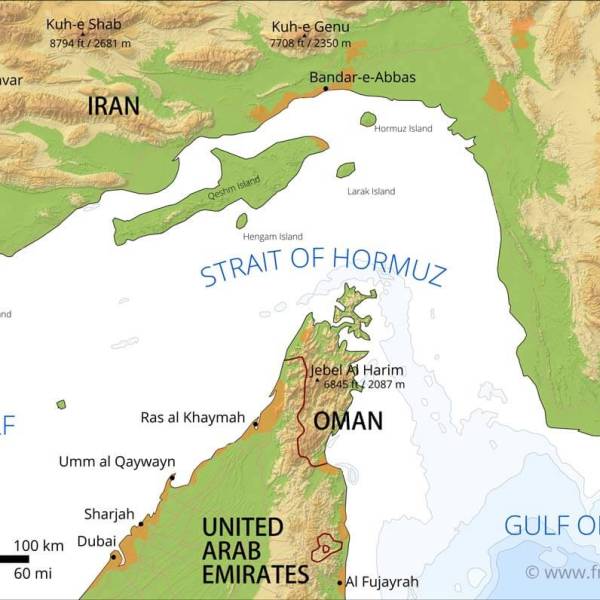
6. The 2026 stress test: The Hormuz supply crisis — vehicle supply down, sales projected off ~12%, parts costs inflated, lubricants rationed — is separating the disciplined groups from the improvisers in full view of their OEM principals. Crisis performance is being logged in every principal’s partner assessment right now, and it will be remembered at the next franchise decision.

Figure 3: The Franchise Map Redrawn — GCC Market Share by Brand Origin, 2019–2030 (%, Reported + Projected)

FIG 03

Chinese brands’ trajectory from low single digits to a projected 34% GCC share by 2030 (AlixPartners) is redistributing a third of the market’s franchise economics inside a single decade. Every point of that share flows through a distribution agreement signed in this window — to an incumbent family that moved, or to a competitor that moved faster. The Japanese wave of the 1960s created today’s dynasties; the Chinese wave of the 2020s is creating the next ones.

Figure 4: The Annuity Under Pressure — Dealer Aftersales Gross Profit Pools, ICE Era vs. EV-Transition Era (Indexed, Aftersages Model)

FIG 04

Aftersages modelled evolution of dealer aftersales profit pools through the EV transition. Traditional pools — engine service, transmission, exhaust, fluids — decline with parc electrification, while new pools — HV systems, battery health, ADAS calibration, software and connected services, EV body repair — grow to more than replace them for certified operators. The succession relevance is direct: the new pools require exactly the investment decisions and technical modernisation that founder-generation conservatism most often defers, and next-generation leaders are best placed to build.

The Once-in-a-Generation Test
A Gulf family that wanted a major vehicle franchise in 1995 had essentially no path — every meaningful brand was taken and had been for decades. In 2026, a dozen Chinese OEMs with a projected third of the market are actively selecting partners. The franchise map is open for the first time in forty years, and it will close again by roughly 2028. The families winning these agencies share a profile: professional management, visible EV and aftersales capability, digital retail, and governance a Chinese principal can diligence. That profile is buildable — but not after the window closes.

The Advantages: Why Family Distributors Win PART 03

The family distribution model did not dominate this region by accident. Its advantages are real, structural, and — properly governed — renewable across generations. Each one below is stated with the succession event that destroys it, because in automotive every advantage is also a hostage to transition.

The OEM Trust Relationship
50–70 yrs
Continuous principal partnerships, region-wide
Decades of shared history, honoured commitments and joint investment create a partnership depth no corporate retailer can replicate. OEM regional teams extend network rights, allocation priority and new-model launches to partners they trust — and trust, in this region, has a family name.
Destroyed by: visible family disorder at succession — the one thing principals cannot ignore
Patient Capital for Heavy Assets
Decades
Investment horizon on land, facilities, networks
Flagship showrooms, national workshop networks, parts warehouses and training centres are 20-year assets. Family balance sheets — unleveraged, unhurried, often land-rich — fund them without quarterly-earnings pressure, which is precisely why OEMs chose families in the first place.
Destroyed by: succession-era leverage and dividend extraction to settle branches
The Aftersales Annuity Mindset
~50%+
Of gross profit from parts & service, typical
Families think in customer lifetimes, not transactions — the mentality that builds service retention, parts loyalty and the workshop relationships that survive market cycles. The 2026 crisis is proving it again: aftersales is carrying groups through a −12% sales year.
Destroyed by: heirs who chase new-car volume prestige and starve the workshop
Government & Fleet Access
Embedded
Institutional, fleet and tender relationships
Police fleets, government tenders, corporate and rental volumes flow through relationships built across generations. This demand base smooths cycles and underwrites network investment — and is among the assets OEMs value most in their regional partners.
Destroyed by: relationship concentration in one principal who exits without transfer
Multi-Brand Portfolio Resilience
Diversified
Brands + finance + rental + used + property
The mature groups hold portfolios across volume, premium and now Chinese brands, plus captive finance, leasing, rental, used-car and property operations — a structure that absorbs any single brand’s bad cycle and funds expansion into the next opportunity.
Destroyed by: fragmentation splits that carve the portfolio into sub-scale branch fiefdoms
Speed When It Matters
Days
Owner-level decisions on land, brands, capex
A new Chinese agency, a distressed competitor’s facilities, a prime plot on a growth corridor — the family that can decide in a week beats every corporate process. The Chinese franchise window is being won right now by exactly this speed.
Destroyed by: shareholder deadlock — the deal that dies in the family WhatsApp group
The Advantage Paradox, Automotive Edition
Every advantage above compounds across generations — and every one is forfeited in a single bad transition. The OEM trust of fifty years can be spent in one contested succession; the patient balance sheet can be leveraged in one branch buyout; the annuity can be starved in one heir’s showroom vanity cycle. The family distribution model’s returns are generational; therefore so is its risk. Part 4 maps where it breaks.

The Disadvantages: Where Dealer Families Break PART 04

The weaknesses of the automotive family business are the shadow of its strengths, sharpened by the sector’s specific structure: a licensed core asset, a technically accelerating product, and a principal watching everything. Six failure patterns recur.

Founder-Held Principal Relationships
1 Person
Where the OEM relationship actually lives
The annual principal meetings, the personal history with OEM leadership, the crisis phone calls — concentrated in the founder or senior principal. When that person exits without a deliberate relationship transfer, the OEM finds itself partnered with a company it no longer knows.
Sector amplifier: the counterparty has contractual options when trust resets to zero
Franchise Complacency
Protected
Decades of exclusivity dull the competitive muscle
Exclusive national agreements built empires — and bred operations that never had to fight for a customer. Underinvested CX, aging facilities, slow digital retail and take-it-or-leave-it service culture were survivable in a closed market. The Chinese entry and agency-model era end that market.
Sector amplifier: new entrants benchmark customers against a different standard every month
Aftersales Underinvestment
Deferred
EV, ADAS, diagnostics, technician development
The profit centre is treated as a cash cow, not an investment case: technician training lags, EV/HV certification is deferred, ADAS calibration is subletted, diagnostic capability stagnates. The annuity is milked while its next-generation replacement pools go unbuilt.
Sector amplifier: OEM aftersales KPIs make this failure visible to the principal quarterly
Conflict & Branch Rivalry
42%
ME conflict incidence vs. 33% global (PwC)
In dealer families, rivalry acquires assets: brands, territories and showrooms become branch trophies, allocated by family politics rather than commercial logic. The portfolio fragments operationally long before it fragments legally.
Sector amplifier: OEMs read dealer-network dysfunction faster than any outsider
Ownership Fragmentation
2 → 30+
Shareholders by G3, absent structuring
Default inheritance mechanics scatter shares across heirs with divergent needs — operators, dividend-seekers, exiters. In automotive the stakes are higher: a deadlocked cap table cannot approve the facility capex, brand acquisition or EV investment the franchise standards require.
Sector amplifier: change-of-control and assignment clauses can be triggered by exactly this drift
Digital & Talent Lag
<1 in 10
Dubai family firms using GenAI vs. 36% of GCC firms
Family employment ceilings push the best automotive executives toward the professionalised majors and the new Chinese operations; digital retail, data and AI adoption lag exactly where the next franchise decisions will be scored.
Sector amplifier: Chinese OEMs diligence digital capability as a franchise criterion

Figure 5: The Failure Mode Map — Contribution to Automotive Family Business Value Loss at Transition (Aftersages Assessment, %)

FIG 05

Aftersages analytical decomposition of value-loss drivers in automotive family transitions, adapted from the general family business research base to the sector’s structure. The automotive-specific driver — franchise loss or downgrade at transition — compounds every other: conflict, fragmentation and unprepared successors all become franchise events when a principal is watching. The playbook in Part 7 addresses each driver directly.


The Generational Cliff: Losing the Business — and the Franchise PART 05

“Shirtsleeves to shirtsleeves in three generations” applies to dealer families with an extra clause: the third generation may lose not only the business’s value but its licence to exist. This part maps the transition generation by generation, then dissects the loss mechanics specific to automotive distribution.

G1: The Founder-Trader
Builder
Won the franchise; is the OEM relationship
Personal
Principal Trust
Total
Authority
Handshake
Governance
1–2
Owners
Critical risk: the OEM relationship, government access and internal authority all live in one person — and the transfer window is only open while he is
G2: The Sibling Partners
~30%
Of family firms reach this stage intact
Divided
Brands/Territories
3–8
Owners
Inherited
OEM Goodwill
Growth Era
Masks Friction
Critical risk: brands and dealerships allocated as sibling territories without portfolio logic — the fragmentation of G3 is designed, silently, in G2
G3: The Cousin Consortium
~12–13%
Of family firms reach this stage
10–30+
Shareholders
No Memory
Of the Founder Deal
Capex
Deadlock Risk
OEM
Re-Evaluating
Critical risk: cousins who never worked together must jointly approve EV facility capex while the OEM benchmarks them against professionalised rivals. Deadlock here is a franchise event
G4: The Automotive Institution
~3–4%
Of family firms reach this stage
Holding
Structure
Pro CEOs
Family Board
Portfolio
Multi-Brand/Market
OEM
Preferred Partner
The survivors stopped being a family running dealerships and became a family governing an automotive institution — and the OEMs consolidated toward them

The Loss Mechanics: How Dealer Families Actually Lose It

Six Ways the Business — and the Franchise — Is Lost After a Generation

The vacuum event, franchise edition: The principal dies or is incapacitated with no announced successor. In any family business this freezes banks and staff; in a dealer family it also triggers the OEM’s contingency file. Documented GCC cases show hundreds of millions in value evaporating within days of a founder’s sudden exit — and principals quietly initiating partner reviews in the same window. The emergency plan is franchise protection, not paperwork.
The relationship gap: The successor inherits the company but not the fifteen years of principal dinners, launch events and crisis calls that constituted the actual partnership. OEM regional teams rotate too — and suddenly neither side of a fifty-year relationship contains anyone who built it. Unmanaged, trust resets to the contract; and the contract has exit clauses.
The fragmentation split: Ownership scatters across heirs; the pragmatic “solution” carves the group into branch companies — one takes the volume brand, another the premium agency, another the property. Each fragment is sub-scale, and the OEMs’ consolidation preference does the rest: within a decade the fragments are acquisition targets for the institutions that stayed whole.
The unprepared heir meets the technical cliff: A successor appointed by birth order inherits a business transforming faster than at any point in its history — EV, ADAS, agency economics, digital retail, Chinese competition — with 69% probability of no formal succession plan behind him and a senior team he has never led. The founder ran a simpler business brilliantly; the heir runs a harder business unprepared.
The conflict spiral with an audience: Family disputes in dealer families play out in front of staff, banks, customers — and the principal. Regional conflict incidence (42%) exceeds the global average, and in this sector every escalation is logged in a partner-assessment file. Franchises are rarely terminated for conflict; they are quietly non-renewed, downsized, or diluted with parallel appointments.
The stagnation fade, accelerated: The quiet death runs faster in automotive: an heir generation that defends showroom formats, ICE-era aftersales and walk-in retail while the market moves to EV, digital and Chinese brands doesn’t fade over thirty years — it becomes commercially irrelevant to its principal within ten, and the franchise moves with the market.

Figure 6: The Survival Curve Meets the Franchise — Family Firm Survival by Generation vs. Franchise Retention Confidence (Aftersages Assessment)

FIG 06

The global family business survival benchmarks (~30% to G2, ~12–13% to G3, ~3–4% to G4) overlaid with Aftersages’ assessment of franchise-retention confidence for ungoverned dealer families at each transition. The franchise line sits below the survival line at every stage: a dealer family can survive a messy transition as a family and still lose brands, territories or exclusivity through it. In automotive, “surviving” and “retaining the portfolio intact” are different bars — and the second one is the business.

Figure 7: Transition Risk Matrix — Automotive Loss Mechanics by Preventability and Value Impact (Aftersages Assessment)

FIG 07

Aftersages assessment plotting the six loss mechanics by preventability through governance and value-impact severity, bubble size indicating regional prevalence. As in the wider family business population, the most destructive automotive failure modes — the vacuum event and the relationship gap — are also the most preventable. Dealer family mortality concentrates exactly where deliberate planning works best: succession design and principal relationship transfer.

What the OEM Sees at Succession
Put yourself in the principal’s chair. A fifty-year partner’s founder has exited. The OEM regional team now assesses: Is there a clear, capable successor we know? Is the ownership structure stable or fragmenting? Is aftersales performance holding through the transition? Is the group investing in our EV and facility standards, or frozen? Are we reading about the family in the courts? Every question has a documented answer the family controls years in advance — or an improvised answer discovered in the worst quarter of its history. Franchise decisions at succession are rarely sudden. They are the audit of a decade of governance, rendered in a moment.

The Governance Toolkit: Structures OEMs Trust PART 06

Governance in a dealer family serves two audiences at once: the family, for whom it replaces the founder’s authority; and the principal, for whom it demonstrates institutional continuity. Every instrument below is standard family business architecture — annotated here for its automotive function and its regional legal enabler.

InstrumentWhat It DoesAutomotive FunctionRegional Enablers
Family Constitution / CharterDocuments values, employment policy, ownership rules, dividend policy, and the conflict-resolution ladder — agreed while relationships are strong.Prevents brands and territories becoming branch trophies; gives the OEM a legible, stable counterparty logic; keeps disputes out of the principal’s field of view.Recognised as the Family Company Charter under UAE Decree-Law 37/2022; DIFC Family Arrangements Regulations 2023
Holding Company / Foundation StructureConsolidates operating companies under a family holding; heirs own the holding, not the assets; foundations/trusts hold the structure together across generations.Keeps the brand portfolio whole through inheritance events; avoids triggering change-of-control and assignment clauses through ownership drift; presents one shareholder to every principal.Share classes and transfer restrictions under Decree-Law 37/2022; DIFC/ADGM foundation and trust regimes with UAE tax-transparency treatment
Professional Board with IndependentsIndependent directors with automotive, finance and transformation credentials; defined authorities including succession oversight above professional management.The single structure OEMs most visibly reward: network expansion, new brands and renewal benefit-of-the-doubt flow to professionally governed partners. Also the strongest performance correlate in the research base.Regional governance codes; PwC board diversity benchmark (2+ women, one under-40, one non-family, one cross-sector)
Shareholder Agreement + Funded LiquidityPre-agreed valuation methodology, buy-sell mechanics, right-of-first-refusal, and funded exit routes for heirs who want out.Converts the most common conflict trigger into a routine transaction — before an exiting branch’s liquidity demand forces the sale of a dealership, a land bank, or a brand.Buy-back mechanisms enabled under Decree-Law 37/2022; family business dispute-resolution committees per emirate
Succession & Principal-Transition PlanA named, developed, announced successor pathway — plus a sealed emergency protocol (interim leadership, signing authorities, communication plan) tested annually.Includes the automotive-specific layer: a multi-year principal relationship transfer — successor present at OEM reviews, launches and crisis calls years before the handover, so the partnership never resets to the contract.Deloitte 2026: external professional CEOs a fully legitimate succession option (13%→26% post-succession globally)
Next-Gen Development & Transformation MandateExternal track record required before entry; then full P&L ownership of a transformation vertical.In automotive the proving grounds are obvious and principal-visible: EV and aftersales modernisation, digital retail, the Chinese brand venture, used-car and mobility platforms. The successor earns OEM legitimacy by building what the principal’s scorecard measures.Next-gen priorities align exactly: technology (42%), AI (42%), new products (40%), expansion (39%) — Deloitte Global 2026

Figure 8: Governance Adoption vs. Continuity Impact — GCC Automotive Family Groups (Aftersages Assessment, 2026)

FIG 08

Aftersages assessment of governance instrument adoption across GCC automotive family groups against the continuity impact each delivers. The pattern mirrors the wider family business population but with higher stakes: the highest-impact instruments — the emergency succession protocol and the principal relationship transfer plan — show the lowest adoption. The gap between the bars on each instrument is franchise risk, quantified.

Figure 9: The Principal’s Scorecard — What OEMs Weigh in Partner Continuity Decisions (Aftersages Assessment)

FIG 09

Aftersages assessment of the factors OEM regional teams weigh — formally and informally — when assessing distribution partner continuity, scored for a typical ungoverned family transition versus a governed one. The largest swings sit in successor credibility, ownership stability and aftersales performance through transition: precisely the dimensions the governance toolkit addresses. The governed family does not merely survive the principal’s audit; it converts succession into the moment the partnership deepens.


The Continuity Playbook: 10 Moves PART 07

Built for automotive family principals, next-generation leaders, and the OEM regional teams whose networks depend on getting this right. Sequenced for impact; governed by one rule: everything is easier — and every franchise conversation is stronger — while the founder is alive, healthy, and sitting beside the successor in the principal’s boardroom.

01
Write the Emergency Plan First
A sealed protocol for sudden death or incapacity: interim leadership, signing authorities, bank communication — and, uniquely in this sector, the same-week principal communication plan. The OEM must hear the continuity story from the family before it hears the news from the market. Test it annually.
Prevents the 48-hour value collapse and pre-empts the principal’s contingency file.
02
Hold the Conversation Nobody Wants
A structured, externally facilitated family discussion — founder present — on succession intentions, ownership philosophy, and who wants what. Documented, revisited annually. In a dealer family, ambiguity is not kindness; it is franchise risk with interest.
Converts the 69% no-plan statistic into a mandate for everything that follows.
03
Transfer the Principal Relationship Deliberately
The automotive-specific move: put the successor in every OEM annual review, launch, factory visit and crisis call for 3–5 years before any handover. Build successor relationships across the principal’s regional team, not just its head. The partnership must never depend on people who have both left.
Closes the relationship gap — the loss mechanic no contract clause can fix after the fact.
04
Restructure Ownership Before It Drifts
Consolidate the dealerships, brands and property under a family holding; use share classes, transfer restrictions and foundation structures to keep control coherent while economic benefit flows to all heirs. Check every franchise agreement’s change-of-control and assignment clauses against the structure — before the structure changes itself by inheritance.
Keeps the brand portfolio whole and the principal’s counterparty singular.
05
Build a Board the Principal Respects
Independent directors with automotive retail, finance and transformation credentials; defined authorities including succession oversight. Invite principal-facing transparency: the OEM that sees real governance extends network rights, allocations and — when the moment comes — the benefit of the doubt.
The strongest performance correlate in the research — and the loudest continuity signal to every OEM.
06
Give the Successor the Transformation P&L
External track record first — ideally inside an OEM, a global retailer or a technology business — then full ownership of a proving-ground vertical: the EV and aftersales modernisation programme, digital retail, the used-car platform, or the Chinese brand venture. Legitimacy is earned in the businesses the principal’s scorecard measures.
Produces a successor the OEM has already watched succeed — and closes the digital lag en route.
07
Professionalise Without Apology
Where group complexity exceeds family readiness, appoint external CEOs and brand MDs under family ownership and board control — the model the region’s strongest groups already run and the global data now projects to double. Family employment becomes a charter-governed merit decision, not a birthright with a company car.
Removes the talent ceiling; retains the executives the franchises cannot afford to lose at transition.
08
Ring-Fence Aftersales Through the Transition
Whatever happens in the family, the workshops must not feel it: protect aftersales capex, technician development, EV/HV certification and ADAS capability through the entire transition window. Aftersales KPIs are the OEM’s continuity telemetry — and the annuity is what funds every other move on this list.
Holds the principal’s most-watched metrics green while the family does its hardest work.
09
Compete for the Chinese Franchise Window — as a Next-Gen Mandate
Treat the 2026–2028 Chinese brand partner-selection wave as both growth strategy and succession instrument: a next-generation-led bid, built on demonstrated EV, aftersales and digital capability. Win, and the family adds the growth engine of the next decade under its successor’s name. The window closes by ~2028.
The first franchise-formation event in forty years — and the successor’s coronation, if taken.
10
Fund the Exits, Institutionalise Renewal
Pre-agree and fund buy-sell mechanics so an exiting heir is a transaction, not a war. Then govern reinvention permanently: portfolio review discipline, M&A capability (the +14% edge), mobility and used-car diversification, and openness to partial listing as a succession tool. The legacy is not the 1965 agency letter; it is the capital, name and OEM trust — redeployed.
Defeats deadlock and the stagnation fade — and positions the group as consolidator, not target.

Figure 10: Continuity Probability by Governance Intensity — Modelled Intact Survival (With Franchise Portfolio) to G3 (Aftersages Model, %)

FIG 10

Aftersages modelled illustration of how governance intensity shifts the odds against the global baseline (~12–13% survival to the third generation), with the additional automotive bar of retaining the franchise portfolio intact. Each layer compounds: emergency plan, principal transfer, ownership structure, professional board, developed successor, funded liquidity. Governance does not guarantee continuity — but in a sector where the core asset is licensed from a watching counterparty, its absence very nearly guarantees the opposite.


The 2035 Map: Scenarios & Structural Forces PART 08

By 2035 the region’s automotive retail landscape will have been re-sorted — by succession outcomes as much as by market forces. The sorting has already begun: the professionalised majors are consolidating, the Chinese franchises are being awarded, and the founder generation is handing over. Five structural forces will do the sorting.

Five Structural Forces Shaping Automotive Family Business Through 2035

01
Succession and Consolidation Are the Same Event
The handover decade and the consolidation decade coincide. Every fumbled transition creates an acquisition opportunity for the institutions that stayed whole; every governed transition creates an acquirer. OEMs quietly accelerate the process, preferring fewer, stronger, better-governed partners per market — and steering network decisions accordingly.
By 2035, meaningfully fewer, larger family groups hold materially more of the market
02
The Chinese Franchises Mature Into the New Dynasties
The agencies being signed in 2026–2028 will be, by 2035, established multi-billion operations with national service networks — held by whichever families won the window. A projected 34% of the market’s franchise economics will sit in agreements less than a decade old, governed by principals who selected for capability and will re-select for it.
The 2020s franchise map hardens by ~2028 — and then stays hard for a generation
03
The Distributor Role Is Redefined — Not Removed
Agency-model economics, OEM digital channels and connected-car customer ownership will reshape margins and roles, but the region’s realities — service networks, fleet relationships, capital intensity, market knowledge — keep a capable local partner essential. The distributors that thrive sell capability: aftersales excellence, EV infrastructure, logistics, customer experience. The ones that sell incumbency get repriced.
The franchise of 2035 is a capability contract wearing a heritage name
04
The Aftersales Annuity Is Re-Issued to the Certified
As the parc electrifies and ADAS densifies, the traditional service annuity migrates into HV repair, battery services, calibration, software and certified body repair — pools the informal aftermarket cannot enter. Authorised networks that built the capability recapture work that leaked to independents for decades. The annuity survives; its ownership is being re-decided.
The dealer family’s most patient asset is re-awarded, workshop by workshop, this decade
05
The Next Generation Redefines the Legacy as Mobility
A successor generation prioritising technology, AI and new ventures will not preserve the founder’s showroom business — it will extend the group into used-car platforms, subscription and rental, charging, fleet services and mobility technology, with the franchise as anchor rather than boundary. National programmes and regional capital markets exist to fund exactly this redeployment.
The dynasties of 2035 are mobility groups whose first asset happened to be a car agency
ScenarioShape2035 OutcomePosture Required Now
A — The Automotive InstitutionThe family executes the full playbook early: governed succession, principal transfer, whole portfolio, professional management, next-gen transformation mandate, Chinese franchise won.A consolidator: multi-brand, multi-market, OEM-preferred, holding legacy and Chinese agencies plus mobility ventures — compounding the family premium and acquiring Scenario C assets at succession discounts.Execute the ten moves while the founder can bless them — and bid for the franchise window before ~2028.
B — The Managed Muddle (Base Case)Partial governance: a successor named but not principal-legitimised; aftersales milked, not modernised; the Chinese window watched, not won; conflict suppressed, not governed.Survival with erosion: the group persists but loses selected brands, territories or exclusivity at transition moments, misses the new-franchise wave, and enters G3 as a potential target rather than an acquirer.Upgrade intentions to instruments — every softly-held understanding must become a documented, funded, principal-visible mechanism.
C — The Franchise CliffNo structure meets a trigger: sudden founder loss, an escalated dispute in front of the principal, a fragmented cap table that cannot approve EV capex, or stagnation meeting the Chinese entry.The statistics claim their share — with the automotive clause attached: brands reassigned, territories carved, the agency letter of 1965 retired with a press release thanking the family for its decades of partnership.If this describes the situation: the emergency plan (Move 01) and the facilitated conversation (Move 02) are not this year’s agenda. They are this month’s.

Figure 11: Automotive Family Enterprise Value Retention Under Three Scenarios, 2026–2035 (Indexed, Aftersages Model)

FIG 11

Aftersages modelled value-retention paths through the transition window, automotive edition. Scenario A compounds through the handover and the Chinese franchise capture; Scenario B erodes in steps at each transition stress point and missed window; Scenario C shows the franchise-cliff pattern — trigger-event collapse deepened by portfolio loss, the automotive-specific discount no other family business faces. The divergence begins years before any transition event, in governance decisions taken today.

Figure 12: Automotive Family Business Institutional Readiness — Current GCC Average vs. Required Standard (Aftersages Assessment, 2026)

FIG 12

Capability assessment across 8 dimensions for GCC automotive family groups approaching transition. The widest gaps — emergency succession readiness, principal relationship transfer, and EV/aftersales modernisation — map directly onto the loss mechanics of Part 5 and the principal’s scorecard of Part 6. Each gap is a governed decision away from closing; none closes by itself, and none can be closed by the next generation alone after the founder — and the OEM executives who knew him — are gone.

The Bottom Line for Automotive Family Principals
The founders of this industry won their franchises with a handshake and kept them with fifty years of performance. Their grandchildren will keep them — or lose them — the same way: not through the strength of the surname, but through what the principal sees when it looks at the group. An automotive family business is the only asset class where succession is audited in real time by the counterparty that owns the core asset’s future — which makes it the family business with the least room for improvisation and the greatest reward for governance. The institutions of 2035 are being chartered now, in family constitutions, principal boardrooms and Chinese franchise bids. The cautionary tales are being deferred now, too — one postponed conversation at a time.

Research Methodology & Data Sources

This study synthesises data from: PwC Middle East Family Business Survey and NextGen Surveys (2022–2024), Deloitte Global ‘Family Business Succession Planning and the Next Generation’ (2026), KPMG Global Family Business Report (2025), Family Business Council – Gulf asset estimates, World Economic Forum family business analysis, Gitnux Family Business Statistics Report (2026), JOH Partners ‘The Succession Gap: Readiness Across Sixty GCC Family Groups’ (2026), The Platinum Capital ‘Succession Planning in Gulf Family Businesses’ (2026), ZED ‘GCC Family Succession’ analysis (2026), AlixPartners / Arab News Chinese OEM MEA market share analysis (2025), YallaMotor and Cartea GCC Chinese brand market reporting (2026), S&P Global Mobility GCC market analysis (2026), UAE Federal Decree-Law No. 37 of 2022 on Family Companies and associated legal commentary, DIFC Family Arrangements Regulations 2023 and Global Family Business and Private Wealth Centre materials, Dubai Department of Economy & Tourism family business guidebook (2025), and Aftersages Automotive Consultancy proprietary observations from GCC and Levant automotive distribution, dealer group and aftersales engagements (2022–2026). References to long-running OEM–family distribution relationships reflect publicly documented partnership histories; no statement in this study refers to the internal affairs, succession status or governance of any named or identifiable family or group. Generational survival percentages reflect widely cited global research benchmarks. Figures identified as Aftersages models or assessments — including dealer P&L composition, franchise-retention confidence, governance adoption, the principal scorecard, and scenario paths — are analytical constructions from this evidence base; they are indicative and should be validated against each group’s own circumstances with qualified legal, governance and franchise advisors before structuring decisions.

References

  1. PwC Middle East (2023) ‘Middle East Family Business Survey’. Available at: pwc.com
  2. Deloitte Global (2026) ‘Family Business Succession Planning and the Next Generation’. Available at: deloitte.com
  3. KPMG (2025) ‘Global Family Business Report’. Available at: kpmg.com
  4. AlixPartners / Arab News (2025) ‘Chinese Automotive Brands Expected to Achieve 34% MEA Market Share by 2030’. Available at: arabnews.com
  5. World Economic Forum, ‘Family Businesses Are the Lifeblood of the Middle East. How Do We Ensure They Survive?’. Available at: weforum.org
  6. PwC Middle East (2024) ‘NextGen Survey 2024: A Dubai Focus’. Available at: pwc.com
  7. YallaMotor (2026) ‘Your Complete Guide to Buying Chinese Cars in the GCC’. Available at: yallamotor.com
  8. S&P Global Mobility (2026) ‘US–Iran War: Global Auto Industry Impact’. Available at: spglobal.com
  9. The Platinum Capital (2026) ‘Succession Planning in Gulf Family Businesses: The Trillion Dollar Handover’. Available at: theplatinumcapital.com
  10. JOH Partners (2026) ‘The Succession Gap: Readiness Across Sixty GCC Family Groups’. Available at: johpartners.com
  11. ZED (2026) ‘GCC Family Succession’. Available at: zedayesh.com
  12. Gitnux (2026) ‘Family Business Statistics: Market Data Report’. Available at: gitnux.org
  13. UAE Ministry of Economy, ‘Ministers and Officials Underline Importance of the New Family Business Law’. Available at: moet.gov.ae
  14. Hadef & Partners (2022) ‘Major Legal Development — New UAE Family Business Law’. Available at: hadefpartners.com
  15. PwC Middle East (2023) ‘The New DIFC Family Arrangements Regulations’. Available at: pwc.com
  16. Dubai Department of Economy & Tourism (2025) ‘Family Businesses in the Emirate of Dubai: A Guidebook’. Available at: investindubai.gov.ae
Disclaimer: This study is intended for informational purposes only and reflects Aftersages’ interpretation of publicly available data and industry trends. Figures identified as estimates or models are indicative. No statement in this study refers to the internal affairs, succession status or governance of any named or identifiable family or group. It does not constitute legal, professional, financial, or operational advice; families should engage qualified legal, governance and franchise advisors before making structuring or succession decisions.
Readers should conduct their own independent assessment before making business decisions.
© Aftersages. Content protected. All rights reserved.

Read more

Discover more from Aftersages

Subscribe now to keep reading and get access to the full archive.

Continue reading